

Research Updates
February 2026 Research Updates
Microbiome Study (Dhivya Thenappan, Texas A&M University)
Organic spinach production faces challenges from inconsistent yields, variable nutrient efficiency, and disease susceptibility, partly due to limited understanding of the microbiomes that support plant health under organic management. The microbiome study which is part of the in the NIFA OREI project "Systems Approach to Manage Organic Spinach Productivity" aims to address this gap by investigating how plant-associated microbial communities influence nutrient uptake, growth, and resilience. Specifically, the project characterizes bacterial and fungal communities across soil, root, leaf, and seed compartments, examines the effects of cultivar and environmental factors on microbiome assembly, links microbial structure and functional potential to plant performance, and identifies seed-associated beneficial microbes for potential microbiome-based interventions.
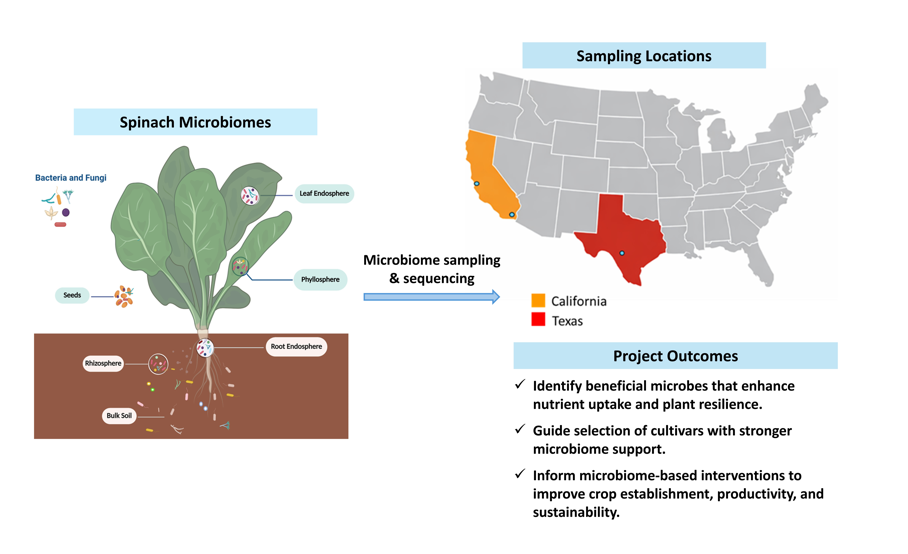
Fig 1. Spinach microbiomes, sampling locations and project predicted outcomes. Dhivya Thenappan.
Progress has been achieved through in-house organic field trials in Texas and multi-location sampling across commercial farms in California. In Texas, eight cultivars were cultivated under uniform organic management, with samples collected from bulk soil, rhizosphere, root endosphere, leaf surface, and leaf interior, allowing detailed analysis of microbial movement and community structure across compartments. In California, nine baby spinach cultivars were sampled across Imperial and Monterey Counties, highlighting the influence of location and environment on phyllosphere microbial communities. DNA extractions, sequencing, quantitative PCR, and functional predictions were employed to characterize bacterial and fungal diversity, identify core taxa, and infer microbial functional contributions to nutrient cycling, stress tolerance, and plant-microbe interactions.
Key findings demonstrate strong compartment-specific structuring, with roots enriched in Actinobacteria and Bacillus, leaves dominated by Sphingomonas, Microbacterium, and Pseudomonas, and conserved core taxa including Pseudarthrobacter, Sphingomonas, Nocardioides, and ammonia-oxidizing archaea. These microbes collectively contribute to nitrogen cycling, microbial stability, and pathogen suppression. Environmental location was the main driver of leaf microbiome composition, while cultivar identity exerted subtle but measurable effects. Functional predictions indicate that carbon metabolism, nitrogen cycling, and stress tolerance are maintained across cultivars and locations, supporting relatively uniform plant performance under organic conditions.
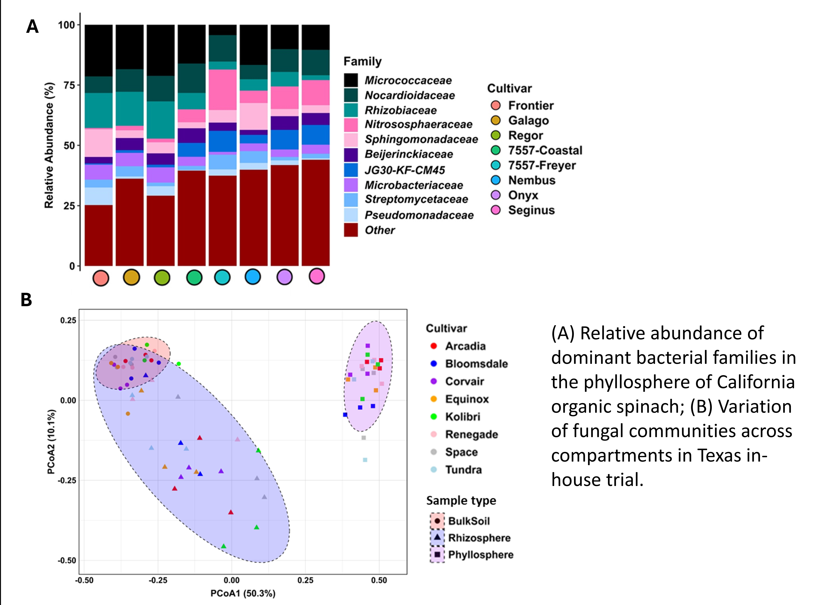
Fig. 2. A. Relative abundance of dominant bacterial famlies in the phyllosphere of California organic spinach. B. Variation of fungal communities in Texas trial. Dyvia Thenappan.
During this period, a manuscript on phyllosphere bacterial diversity across multiple field locations in California was submitted for publication, while the mycobiome study across the soil-phyllosphere continuum in the Texas in-house trial is in progress. Remaining manuscripts in preparation will describe cross-kingdom soil-rhizosphere interactions and bacterial ecology linking microbiome structure to crop performance. We also began a new seed microbiome initiative, in which we are profiling 15 globally sourced cultivars using shotgun metagenomic sequencing to identify beneficial endophytes and trace microbial transmission from seed to plant.
Next steps include completing the remaining manuscripts, finalizing core microbiome analyses, performing source tracking, conducting co-occurrence network modeling, integrating functional predictions, and identifying beneficial microbial taxa associated with reduced pathogen pressure and potential disease-suppressive functions. Synthetic microbial consortia derived from beneficial seed endophytes will be developed and tested for their effects on seedling establishment, microbiome assembly, and spinach growth. Project outcomes were disseminated through an oral presentation at the ASHS 2025 conference. This work will provide foundational knowledge of soil-, root-, leaf-, and seed-associated microbiomes, and identify key microbial taxa and functional pathways supporting nutrient turnover and plant resilience.
Practical Implications: These findings will help farmers and plant breeders understand that spinach health and productivity are strongly influenced by the communities of microbes living in soil, roots, leaves, and seeds. Farmers can enhance nutrient uptake, reduce disease risk, and achieve more consistent yields by maintaining healthy soils and selecting cultivars that harbor beneficial microbial communities. Plant breeders can leverage insights into key microbial taxa and their functional traits to develop cultivars that naturally foster supportive microbiomes. In the future, these insights could guide microbiome-based interventions, such as seed treatments with beneficial microbes, to enhance spinach growth, resilience, and food safety, making organic spinach production more reliable and sustainable.
Genome-Wide Association Study of Leaf Architecture and Pigment Traits in Organic Spinach. (Dr. Benedict Analin, Dalton Thompson, Texas A&M University)
This study performed a genome-wide association study (GWAS) to explore the genetic factors behind natural variation in leaf structure and pigment content in spinach grown under certified organic conditions. A total of 310 USDA GRIN global spinach accessions, along with commercial varieties, were cultivated at the Texas A&M AgriLife Research and Extension Center in Uvalde, Texas. These accessions were assessed for various leaf morphology traits—including leaf area, perimeter, texture, edge type, venation patterns, and petiole length and color—as well as pigment-related traits like chlorophyll a, chlorophyll b, total chlorophyll, carotenoids, and anthocyanin levels. To locate the genetic regions influencing these traits, a multi-model Genome-Wide Association Study (GWAS) was conducted with GAPIT-3, an R-based tool that combines multiple statistical models (by Dr. Ainong Shi of the University of Arkansas). The BLINK model offered the highest statistical power and efficiency. Genotype data were aligned to the Monoe-Viroflay spinach reference genome, and phenotypes were measured under low-input, organic conditions to reveal natural variation often masked in conventional, high-input systems. The analysis identified numerous significant associations between SNP markers and key leaf and pigment traits. Markers surpassing the genome-wide significance threshold indicated strong trait–marker relationships and the presence of QTLs. Particularly promising are SNPs within about 50 base pairs of annotated candidate genes, which are prime targets for future breeding efforts.
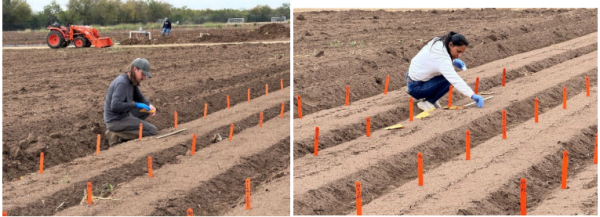
Fig. 3. Sowing of USDA GRIN-Global spinach accessions and commercial varieties in a certified organic field at the Texas A&M AgriLife Research and Extension Center, Uvalde, Texas during the 2024 fall–winter season.
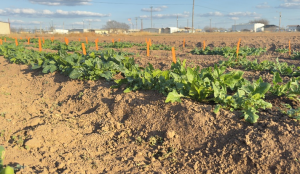
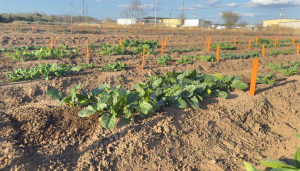
Fig. 4. Morphology of spinach seedlings at two months post-germination in an organic system. Texas A&M AgriLife Research and Extension Center, Uvalde, Texas.
Major Findings
Photosynthetic Traits: Photosynthetic performance showed natural variation among USDA spinach germplasm under organic conditions. Using high‑resolution gas‑exchange (LI-6800), genotypes differed in photosynthetic rate, water-use efficiency (WUE), transpiration, non‑photochemical quenching (NPQ), and CO₂ carboxylation efficiency. Multi‑model GWAS identified significant SNPs on all six chromosomes for these traits, revealing loci and genes linked to enhanced photosynthesis and photoprotection. WUE loci indicated a trade‑off: higher WUE genotypes were drought resilient, while lower WUE maintained cooling and heat tolerance. SNPs associated with NPQ indicated differences in photoprotection, providing markers to select lines that thrive under high-light and thermal stress. Overall, these findings help growers select suitable varieties and provide breeders with targets to improve photosynthesis, water use, and resilience.
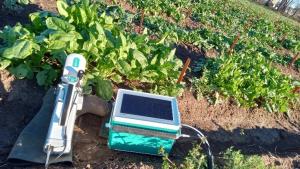
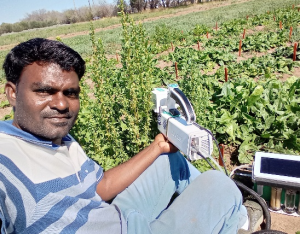
Fig. 5. Photosynthetic phenotyping using the LI-6800 Portable Photosynthesis System.
Leaf Architecture Traits: The GWAS identified multiple chromosomal regions associated with leaf area, perimeter, texture, and edge shape. These regions are associated with genes involved in cell expansion and division, leaf margin development, morphogenesis, and cell wall modification. These genes likely influence canopy structure, light interception, water use, market appearance (e.g., flat, semi-savoy, or savoy types), and harvestability.
Pigment Composition Traits: Several significant associations were found for chlorophylls, carotenoids, and anthocyanins. These genes regulate photosynthesis efficiency, pigment biosynthesis, photoprotection, and antioxidant activity. Variations in pigment levels affect nutritional qualities such as vitamin A precursors and antioxidants, as well as stress tolerance under organic cultivation. Spinach accessions with favorable alleles for these genes tend to stay greener, retain higher pigment levels, and exhibit stronger growth in low-input organic systems.
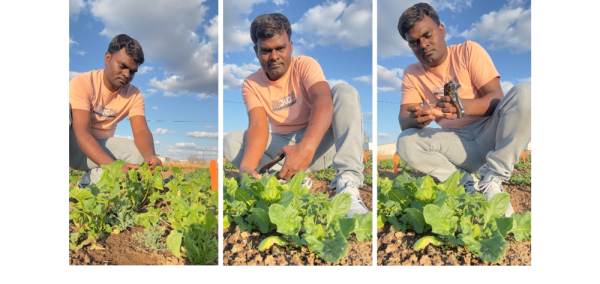
Fig. 6. Collection of 1 cm leaf discs from fully expanded topmost leaves using a paper punch for the analysis of photosynthetic pigments in spinach accessions and commercial varieties grown under a certified organic system.
Significance for Stakeholders
This project highlights the importance of combining organic field-based phenotyping with high-resolution genomic tools. Key findings include uncovering unique genetic variation hidden under conventional high-input systems, expanding the genetic diversity available for cultivar development. The findings provide a scientific basis for developing regionally adapted, climate-resilient, and nutrient-rich organic spinach varieties.
Organic Spinach Growers: The results support breeding spinach varieties better suited to organic farming, offering advantages such as improved nutrient-use efficiency, reduced dependence on fertilizers, increased resilience to stresses such as heat, light, and oxidative conditions, and higher nutritional content, particularly in carotenoids and chlorophylls. These improvements could boost market value and yield stability for organic producers.
Plant Breeders: This study provides a robust set of high-confidence SNP markers and candidate genes for photosynthetic traits, leaf shape and texture, pigment content, nutritional quality, and stress tolerance. These markers are immediately useful for marker-assisted selection (MAS), genomic prediction, and the breeding of spinach varieties optimized for organic and low-input systems. This could accelerate breeding efforts while enhancing precision and resource efficiency.
Biostimulant evaluation of organic spinach. (Sandeep Sran, Dr. Benedict Analin, Dalton Thompson, Texas A&M University)
Bio-stimulants are valued in organic farming for promoting growth and reducing synthetic fertilizer use. Utrisha N, containing the nitrogen-fixing bacterium Methylobacterium symbioticum, can colonize leaf tissues after foliar application and convert atmospheric nitrogen into plant-usable ammonium. For spinach growers, especially in organic or low-input systems, this nitrogen source may help sustain crop vigor during key growth phases. While Utrisha N has shown positive effects on field crops, its impact on leafy vegetables like spinach is largely unexamined. Since spinach requires high nitrogen for chlorophyll and biomass, this study tested whether foliar Utrisha N applications could improve crop performance under both optimal and low nitrogen conditions.
The results indicated that under nitrogen-deficient conditions, three weekly foliar treatments starting at the first true-leaf stage improved both biomass and chlorophyll levels. These benefits, seen even with limited nitrogen input, suggest that Utrisha N may help spinach utilize available nitrogen more efficiently, rather than simply increasing nitrogen accumulation in the plant. Additionally, field tests across eight diverse spinach cultivars revealed that biomass responses to Utrisha N varied by genotype. This variability offers breeders an opportunity: certain genotypes exhibit stronger symbiotic interactions with microbial bio-stimulants, thereby enabling the development of cultivars that perform well even with reduced fertilizer use. For researchers, these findings deepen understanding of how M. symbioticum functions in leafy greens and support the broader potential of microbial bio-stimulants for sustainable nutrient management. Overall, the study provides evidence that Utrisha N can improve spinach growth under nutrient-limited conditions.
Spinach Heat Stress Screening (Dr. Benedict Analin, Dalton Thompson, Texas A&M University)
To help organic spinach producers adapt to earlier and more frequent spring heat events, we are testing the panel using a staggered sowing strategy in late December 2025 and late January 2026. This exposes plants to different temperature spikes and daylight lengths. By doing this, we can identify accessions that maintain growth, hold leaf quality, sustain photosynthesis, and resist premature bolting. These traits are essential for growers aiming for reliable harvests in warming seasons. We are currently evaluating the same USDA spinach accessions used in our GWAS to identify lines that tolerate early-season heat while maintaining high-quality leaves. Off-season plantings in late winter have established well under organic conditions, exhibiting strong, uniform early growth. As temperatures rise, we are monitoring each accession for practical, field-relevant traits such as leaf wilting, tip burn, yellowing, biomass, and, in particular, bolting. Accessions that remain vegetative longer and continue to produce marketable leaves under heat will be identified as promising candidates for growers. This work builds on our OREI heat tolerance study and confirms patterns observed in controlled-chamber studies.
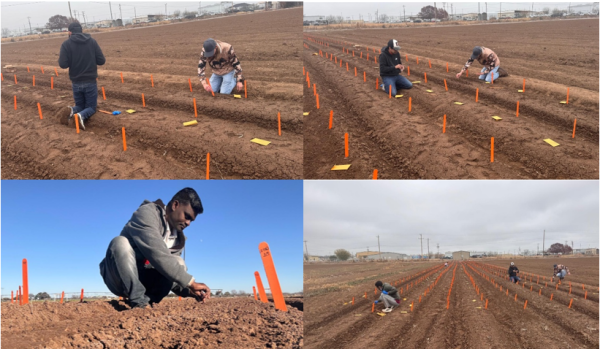
Fig. 7. Off-season planting of USDA GRIN-Global spinach germplasm and commercial cultivars in a certified organic field at the Texas A&M AgriLife Research and Extension Center (Uvalde, Texas) 2026 to assess heat stress under field conditions.
Pilot growth room study: A control-chamber study using a commercial variety (Red Tabby) was performed to refine our measurement of heat stress. Plants are grown under both normal temperatures (20/16 °C) and extreme heat (40/36 °C). Clear stress symptoms—such as leaf burn, increased reactive oxygen species (ROS) in NBT/DAB staining, and higher cell death at 40 °C—confirm that our temperature settings accurately mimic heat stress. This pilot helps us optimize the timing of stress exposure, scoring intervals, and measurements such as NPQ and water‑use efficiency before applying them across all accessions.
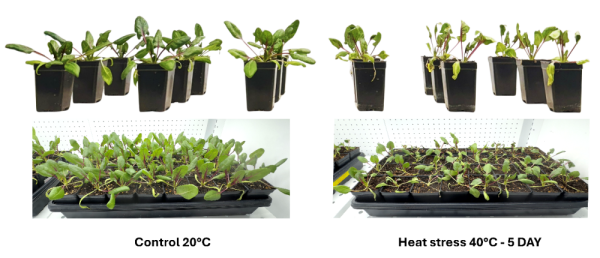
Fig. 8. Controlled-environment, pot-level heat stress experiment conducted in the commercial spinach variety Red-Tabby. Visible stress-induced responses were observed in plants exposed to 40 °C compared with those grown under optimal temperature conditions (20 °C).
Expected outcomes: Using both field and greenhouse data, we expect to identify a set of spinach accessions that reliably tolerate heat, remain vegetative longer, and maintain yield and quality under organic management. These heat-resilient, slow-growing, or non-bolting genotypes will provide breeders with strong candidates for future variety development and will inform marker-assisted breeding and upcoming GWAS studies focused on heat-adaptive traits.
Funding

This project was funded in 2022 by the Organic Research and Extension Initiative grant, part of the USDA National Institute of Food and Agriculture. Grant number 2022-51300-37886.


